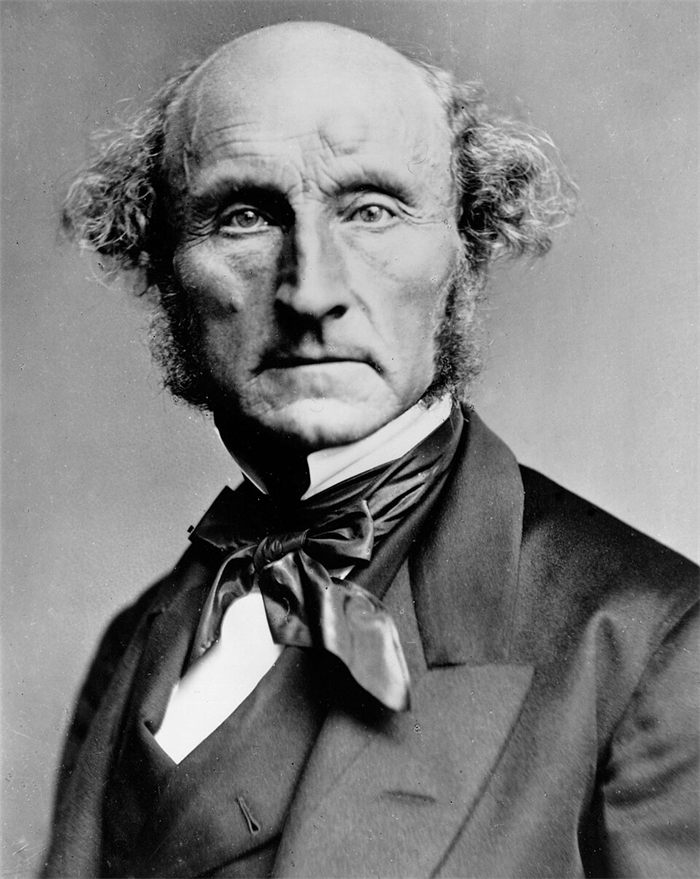
The author in one sentence
I aim for the greatest happiness, and I leave people free unless they harm others.
John Stuart Mill's view as we would sum it up in their voice. Our summary, not a quotation.
Where John Stuart Mill leans
Spirit or matterStrong · Matter
Spirit 20%Matter 80%
Facts: subjective or objectiveStrong · Objective
Subjective 25%Objective 75%
Values: subjective or objectiveStrong · Objective
Subjective 20%Objective 80%
Individual or collectiveLeaning · Collective
Individual 35%Collective 65%
Reason or experienceVery strong · Experience
Reason 5%Experience 95%
Life: meaning, or none at allBalanced
Life has meaning 55%No meaning at all 45%
Other minds: surely real, or only my own is sureStrong · Others surely real
Others surely real 75%Only my mind is sure 25%
The good life: pleasure, or virtue and dutyVery strong · Pleasure is the good
Pleasure is the good 85%Virtue and duty 15%
What makes an act right: principles, or consequencesVery strong · Consequences
Principles 0%Consequences 100%
God: exists, or notBalanced
God exists 50%No God 50%
Technology: speed it up, or hold it backLeaning · Hold it back
Speed it up 35%Hold it back 65%
Universals: real, or only particular thingsVery strong · Only particular things
Universals are real 10%Only particular things 90%
Method: logic and analysis, or lived experienceStrong · Logic and analysis
Logic and analysis 75%Lived experience 25%
Knowledge: we can know, or suspend judgmentBalanced
We can know 50%Suspend judgment 50%


And you, where do you stand?
Take the quiz and see how close you are to John Stuart Mill.
Take the quiz