3 members on this site
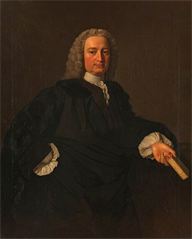
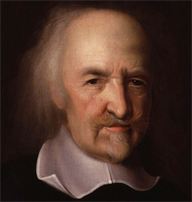 Thomas Hobbes1588–1679 · HobbesianismPart of it until 1648 · until it endedrejoined it in Paris; Mersenne died in 1648
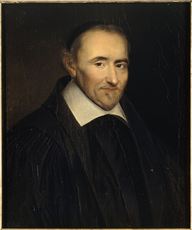 Pierre Gassendi1592–1655 · AtomismPart of it by 1630 · until it ended
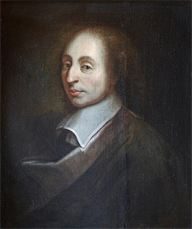 Blaise Pascal1623–1662 · FideismYears not recorded
Where the circle leans
The average of its members on each scale where two or more of them have a position and they roughly agree. Left out because the members split: spirit or matter (Blaise Pascal toward spirit, Thomas Hobbes toward matter); free will or determinism (Pierre Gassendi toward free will, Thomas Hobbes toward determinism); reason or experience (Blaise Pascal toward reason, Pierre Gassendi toward experience); inner life: real, or explained away by the brain (Blaise Pascal toward the mind being real, Thomas Hobbes toward the mind being explained away); the way to the highest: own effort, or grace (Pierre Gassendi toward one's own effort, Blaise Pascal toward grace); the good life: pleasure, or virtue and duty (Pierre Gassendi toward pleasure as the good, Blaise Pascal toward virtue and duty).
Side by side with you
Black dot: the circle, at the average of its members. Red ring: you.
On the maps
Each map puts two scales side by side. Each small square is a school, at its exact spot; its name shows where there is room. For the others, point at the square, or tap it once on a phone. Click a school, or tap it again, to open it.
Swipe sideways to see the whole chart.
Closest circles
Sources
Where the list of members comes from: the exact words on each page.
the group of philosophers and scientists united through correspondence with Mersenne
plato.stanford.eduIn Paris, a small scientific circle of mathematicians and physicists gradually formed around Mersenne
plato.stanford.eduFrom 1633 or so, meetings were organized on Thursdays at the houses of one or another of his friends or protectors
plato.stanford.eduThis ‘Academia Parisiensis’, as it came to be called
plato.stanford.eduIt was later to welcome the young Blaise Pascal
plato.stanford.eduwho was to become the group’s leader when Mersenne died in 1648
plato.stanford.eduwas later a regular debater in philosophic groups in Paris, held together by Marin Mersenne
wikipedia.orgIn Paris, he rejoined the coterie around Mersenne
wikipedia.orgGassendi’s role in that context was by no means marginal
plato.stanford.eduMersenne often used his role as facilitator to bring together opponents on these issues
plato.stanford.eduwas instrumental in the gathering of the six sets of objections that were added to the text with Descartes’s responses, including those of Hobbes and Gassendi
plato.stanford.eduYet the most important figure to this group was not actually an active participant in it, and this was Descartes
plato.stanford.edu
And you, where do you stand?
Take the quiz and see your match with Mersenne’s circle and the other circles.
Take the quiz