3 members on this site
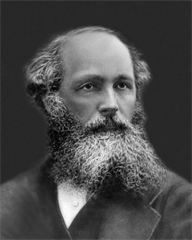 James Clerk Maxwell1831–1879There from 1871 · end not recorded
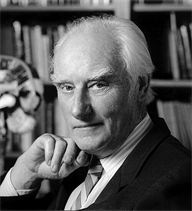 Francis Crick1916–2004 · PhysicalismThere from 1949 · moved onmoved on to the new Laboratory of Molecular Biology
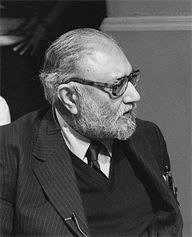 Abdus Salam1926–1996Years not recorded
Where the circle leans
The average of its members on each scale where two or more of them have a position and they roughly agree. Left out because the members split: spirit or matter (James Clerk Maxwell toward spirit, Francis Crick toward matter); inner life: real, or explained away by the brain (James Clerk Maxwell toward the mind being real, Francis Crick toward the mind being explained away); God: exists, or not (James Clerk Maxwell toward God existing, Francis Crick toward no God).
Side by side with you
Black dot: the circle, at the average of its members. Red ring: you.
On the maps
Each map puts two scales side by side. Each small square is a school, at its exact spot; its name shows where there is room. For the others, point at the square, or tap it once on a phone. Click a school, or tap it again, to open it.
Swipe sideways to see the whole chart.
Closest circles

Sources
Where the list of members comes from: the exact words on each page.
The Cavendish Laboratory is the Department of Physics at the University of Cambridge
wikipedia.orgThe laboratory was opened in 1874 on the New Museums Site as a laboratory for experimental physics
wikipedia.orgProfessor James Clerk Maxwell, the developer of electromagnetic theory, was a founder of the laboratory and the first Cavendish Professor of Physics
wikipedia.orgAs of 2019, 30 Cavendish researchers have won Nobel Prizes
wikipedia.orgNotable discoveries to have occurred at the Cavendish Laboratory include the discovery of the electron, neutron, and structure of DNA
wikipedia.orgFrancis Crick already worked in the Medical Research Council Unit, headed by Max Perutz and housed in the Cavendish Laboratory
wikipedia.orgNobel laureates at the Cavendish
wikipedia.orgMohammad Abdus Salam (Physics, 1979)
wikipedia.org
And you, where do you stand?
Take the quiz and see your match with The Cavendish Laboratory and the other circles.
Take the quiz