6 members on this site
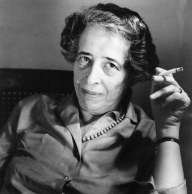 Hannah Arendt1906–1975There 1963–1967 · moved onmoved to the New School in 1967
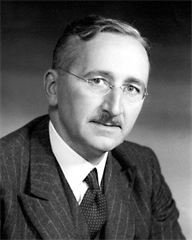 Friedrich Hayek1899–1992 · Classical liberalismThere 1950–1962 · moved onmoved to the University of Freiburg in 1962
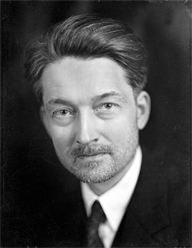 Jacques Maritain1882–1973 · ThomismYears not recorded
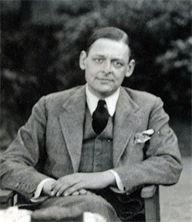 T. S. Eliot1888–1965 · ConservatismYears not recorded
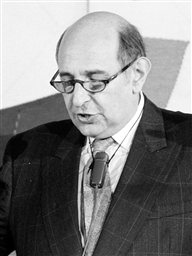 Allan Bloom1930–1992There from 1979 · until deathearned his PhD at the Committee in 1955
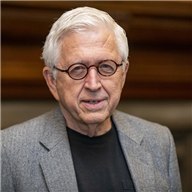 Robert Pippinborn 1948 · HegelianismStill part of it
Where the circle leans
The average of its members on each scale where two or more of them have a position and they roughly agree. Left out because the members split: spirit or matter (Jacques Maritain toward spirit, Friedrich Hayek toward matter); individual or collective (Friedrich Hayek toward individual, Robert Pippin toward collective); reason or experience (Robert Pippin toward reason, Friedrich Hayek toward experience).
Side by side with you
Black dot: the circle, at the average of its members. Red ring: you.
On the maps
Each map puts two scales side by side. Each small square is a school, at its exact spot; its name shows where there is room. For the others, point at the square, or tap it once on a phone. Click a school, or tap it again, to open it.
Swipe sideways to see the whole chart.
Closest circles
Sources
Where the list of members comes from: the exact words on each page.
is a PhD -granting committee at the Social Sciences Division at the University of Chicago
wikipedia.orgIt was started in 1941 by economic historian John Ulric Nef
wikipedia.orgThe committee is interdisciplinary and it is not centered on any specific topic
wikipedia.orgdrawn together noted academics and writers to ‘foster awareness of the permanent questions at the origin of all learned inquiry’
wikipedia.orgNotable past members of and students on the committee have included writers Saul Bellow, J. M. Coetzee, T. S. Eliot
wikipedia.orgpolitical theorists Hannah Arendt, Allan Bloom, and Mark Lilla
wikipedia.orgLeszek Kołakowski, Jacques Maritain, Yves Simon
wikipedia.orgeconomists Robert Fogel and Friedrich Hayek
wikipedia.orgChairs Robert B. Pippin
wikipedia.org
And you, where do you stand?
Take the quiz and see your match with The Committee on Social Thought and the other circles.
Take the quiz