6 members on this site
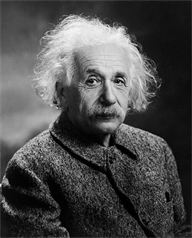 Albert Einstein1879–1955 · SpinozismTook part in 1927
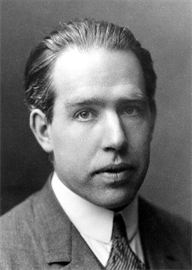 Niels Bohr1885–1962Took part in 1927
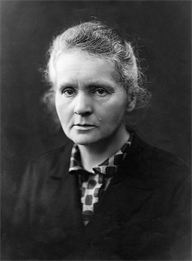 Marie Curie1867–1934Took part in 1927
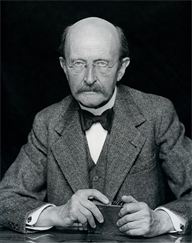 Max Planck1858–1947Took part in 1927
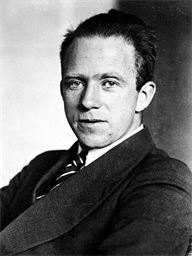 Werner Heisenberg1901–1976Took part in 1927
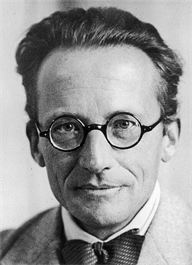 Erwin Schrödinger1887–1961 · Advaita VedantaTook part in 1927
Where the circle leans
The average of its members on each scale where two or more of them have a position and they roughly agree. Left out because the members split: spirit or matter (Erwin Schrödinger toward spirit, Albert Einstein toward matter); God: exists, or not (Werner Heisenberg toward God existing, Niels Bohr toward no God).
Side by side with you
Black dot: the circle, at the average of its members. Red ring: you.
On the maps
Each map puts two scales side by side. Each small square is a school, at its exact spot; its name shows where there is room. For the others, point at the square, or tap it once on a phone. Click a school, or tap it again, to open it.
Swipe sideways to see the whole chart.
Closest circles
Sources
Where the list of members comes from: the exact words on each page.
Perhaps the most famous conference was the fifth Solvay Conference on Physics, which was held from 24 to 29 October 1927
wikipedia.orgThe subject was Electrons and Photons and the world’s most notable physicists met to discuss the newly formulated quantum theory
wikipedia.orgThe leading figures were Albert Einstein and Niels Bohr
wikipedia.orgSeventeen of the 29 attendees were or became Nobel Prize winners, including Marie Skłodowska-Curie
wikipedia.orgEssentially all of those names who had contributed to the recent development of the quantum theory were at this Solvay Conference, including Bohr, Born, de Broglie, Dirac, Heisenberg, Pauli, Planck, Lorentz, Compton, Ehrenfest, and Schrödinger
wikipedia.orgthey have been organised by the International Solvay Institutes for Physics and Chemistry, founded by the Belgian industrialist Ernest Solvay in 1912 and 1913, and located in Brussels
wikipedia.org
And you, where do you stand?
Take the quiz and see your match with The fifth Solvay Conference and the other circles.
Take the quiz