4 members on this site
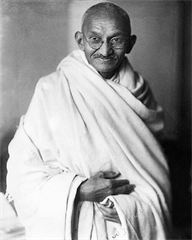 Mahatma Gandhi1869–1948Part of it from 1915 · until it ended
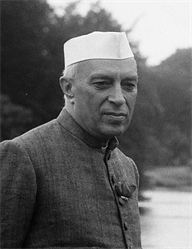 Jawaharlal Nehru1889–1964Part of it from 1912 · until it ended
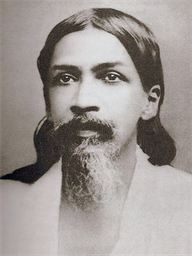 Sri Aurobindo1872–1950 · Integral YogaPart of it 1893–1910 · moved onwithdrew to spiritual practice in Pondicherry
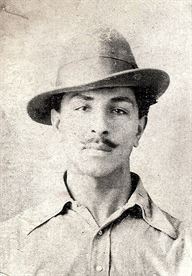 Bhagat Singh1907–1931Until death
Where the circle leans
The average of its members on each scale where two or more of them have a position and they roughly agree. Left out because the members split: spirit or matter (Sri Aurobindo toward spirit, Bhagat Singh toward matter); reason or experience (Sri Aurobindo toward reason, Jawaharlal Nehru toward experience); life: meaning, or none at all (Mahatma Gandhi toward life having meaning, Bhagat Singh toward no meaning at all); God: exists, or not (Mahatma Gandhi toward God existing, Bhagat Singh toward no God); technology: speed it up, or hold it back (Jawaharlal Nehru toward speeding technology up, Mahatma Gandhi toward holding technology back).
Side by side with you
Black dot: the circle, at the average of its members. Red ring: you.
On the maps
Each map puts two scales side by side. Each small square is a school, at its exact spot; its name shows where there is room. For the others, point at the square, or tap it once on a phone. Click a school, or tap it again, to open it.
Swipe sideways to see the whole chart.
Closest circles
Sources
Where the list of members comes from: the exact words on each page.
was a series of political efforts from the mid-1880s to 1947 that took place in the Indian subcontinent with the aim of ending British colonial rule
wikipedia.orgThe first nationalistic movement took root when the Indian National Congress (INC) was formed in 1885
wikipedia.orgThe stages of the independence struggle in the 1920s were characterised by the leadership of Mahatma Gandhi and Congress’s adoption of his policy of non-violence and civil disobedience
wikipedia.orgSome of the leading followers of Gandhi’s ideology were Pandit Motilal Nehru, Sarojini Naidu, Jawaharlal Nehru
wikipedia.orgBengali Hindu nationalists like Sri Aurobindo, Bhupendranath Datta, and Bipin Chandra Pal began writing virulent newspaper
wikipedia.orgBhagat Singh, Sukhdev and Rajguru were hanged in 1931
wikipedia.orgBhagat Singh (left), Sukhdev (center), and Rajguru (right) are considered among the most influential revolutiona
wikipedia.org
And you, where do you stand?
Take the quiz and see your match with The Indian independence movement and the other circles.
Take the quiz