3 members on this site
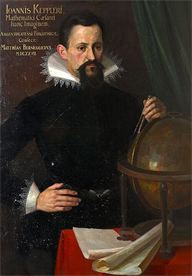 Johannes Kepler1571–1630There 1589–1594 · moved onleft to teach mathematics in Graz
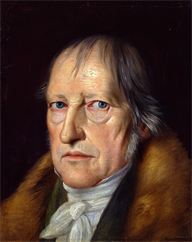 G. W. F. Hegel1770–1831 · HegelianismThere 1788–1793 · moved onfinished his studies
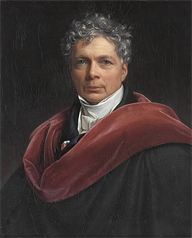 Friedrich Wilhelm Joseph Schelling1775–1854 · IdealismThere 1790–1795 · moved onfinished his studies
Where the circle leans
The average of its members on each scale where two or more of them have a position and they roughly agree. Left out because the members split: reason or experience (Friedrich Wilhelm Joseph Schelling toward reason, Johannes Kepler toward experience); separate from the highest, or one with it (Johannes Kepler toward being separate, Friedrich Wilhelm Joseph Schelling toward all being one); the way to the highest: own effort, or grace (G. W. F. Hegel toward one's own effort, Johannes Kepler toward grace).
Side by side with you
Black dot: the circle, at the average of its members. Red ring: you.
On the maps
Each map puts two scales side by side. Each small square is a school, at its exact spot; its name shows where there is room. For the others, point at the square, or tap it once on a phone. Click a school, or tap it again, to open it.
Swipe sideways to see the whole chart.
Closest circles




Sources
Where the list of members comes from: the exact words on each page.
The Stift was founded as an Augustinian monastery in the Middle Ages
wikipedia.orgAfter the Reformation, in 1536, Duke Ulrich turned the Stift into a seminary which served to prepare Protestant pastors for Württemberg
wikipedia.orglocated in the university city of Tübingen
wikipedia.orgStudents receive a scholarship which consists of boarding, lodging and further academic support
wikipedia.orgSome of the well known ‘Stiftlers’ are the astronomer Johannes Kepler
wikipedia.orgthe poet Friedrich Hölderlin who had as roommates the philosophers G. W. F. Hegel and Friedrich Schelling
wikipedia.orgduring Hegel’s tenure, students privately had access to the ‘forbidden’ texts of Spinoza, Kant and Voltaire
wikipedia.org
And you, where do you stand?
Take the quiz and see your match with The Tübinger Stift and the other circles.
Take the quiz