The two camps
Modern communitarianism began as a critical reaction to Rawls’s 1971 A Theory of Justice. Where Rawls seemed to present his theory as universally true, MacIntyre, Taylor and others argued that standards of justice must be found in the ways of life and traditions of particular societies. They never called themselves communitarians: the label was pinned on them by others.
In our words.
A. The liberals
Placed at the average of these 3 people.
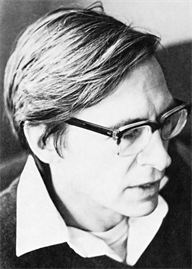 John Rawls1921–2002
 Robert Nozick1938–2002
 Richard Rorty1931–2007
B. The communitarians
Placed at the average of these 3 people.
 Alasdair MacIntyre1929–2025
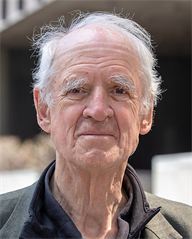 Charles Taylorborn 1931
 Michael Sandelborn 1953
Where they part ways
Each scale both camps have a position on, the biggest gap first.
The liberalsThe communitarians
The big letters are each camp's average; the small dots are its members (filled: The liberals, open: The communitarians). A camp whose members are far apart on a scale is marked split.
Your side
Take the quiz to see which camp you would have joined.
Sources
Where each camp comes from: the exact words on each page.
modern-day communitarianism began in the upper reaches of Anglo-American academia in the form of a critical reaction to John Rawls’ landmark 1971 book A Theory of Justice
plato.stanford.eduDrawing primarily upon the insights of Aristotle and Hegel, political philosophers such as Alasdair MacIntyre, Michael Sandel, Charles Taylor and Michael Walzer disputed Rawls’ assumption that the principal task of government is to secure and distribute fairly the liberties and economic resources individuals need to lead freely chosen lives
plato.stanford.eduWhereas Rawls seemed to present his theory of justice as universally true, communitarians argued that the standards of justice must be found in forms of life and traditions of particular societies
plato.stanford.eduMacIntyre criticizes individualist political philosophy, such as John Rawls ‘ A Theory of Justice and Robert Nozick’s Anarchy, State, and Utopia
wikipedia.orgAnarchy, State, and Utopia (1974), a libertarian answer to John Rawls ‘ A Theory of Justice (1971)
wikipedia.orgThese critics of liberal theory never did identify themselves with the communitarian movement (the communitarian label was pinned on them by others, usually critics)
plato.stanford.eduBy the 1990s, fairly abstract methodological disputes over universalism versus particularism faded from academic prominence
plato.stanford.eduCommunitarian thinkers in the 1980s such as Michael Sandel and Charles Taylor argued that Rawlsian liberalism rests on an overly individualistic conception of the self
plato.stanford.edu‘The Priority of Democracy to Philosophy,’ in which Rorty defends Rawls against communitarian critics
wikipedia.org
And you, where do you stand?
Take the quiz and see which side of Liberals or Communitarians you are on.
Take the quiz