In one sentence
I trust that, given acceptance, I will grow into the person I am able to become.
How someone from Humanistic Psychology might sum up what they believe. Our summary, not a quotation.
Key thinkers
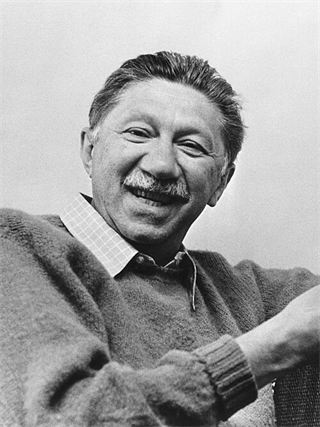
 Abraham Maslow1908–1970 · Religions, Values, and Peak-Experiences
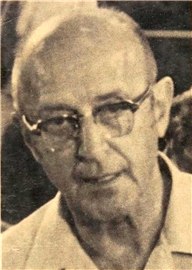 Carl Rogers1902–1987 · On Becoming a Person: A Therapist's View of Psychotherapy
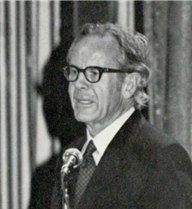 Rollo May1909–1994 · Love and Will
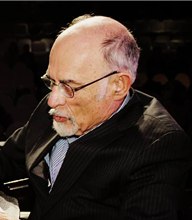 Irvin D. Yalomborn 1931 · Love's Executioner and Other Tales of Psychotherapy
Where it leans
A whole worldview, about both. Positions are our estimates; philosophers argue about where many schools belong.
Most unusual position
78%On subjective or objective, it leans further toward subjective than 78% of the 135 schools on the map.
Middle of all schools on the map: 79 · This school: 41 (0 = Subjective, 100 = Objective)
Most typical position
Spirit or matterOn spirit or matter, it is nearest to the other schools on the map, though still not in the middle.
Middle of all schools on the map: 39 · This school: 55 (0 = Spirit, 100 = Matter)
Where it comes from
What came before Humanistic Psychology and led into it, and what grew out of it. Only links that historians agree on.
Came before it
- From the 1890s: psychoanalysis and behaviourism, the two forces it answered
- Mid-1920s: Otto Rank breaks with Freud and shapes Rogers
- Existential philosophy (Kierkegaard, Nietzsche, Heidegger, Sartre)
Grew out of it
- Later 1960s-1970: Transactional analysis
- 1969: Transpersonal psychology, Maslow's 'fourth force'
- 1969: Person-centred education (Freedom to Learn)
- Last 20 years: Existential positive psychology
One thing to practise
A real practice from Humanistic Psychology, to try this week. Described in our words.
Person-centred listening (the three core conditions)
When someone talks to you, accept them fully without judging, approving or disapproving. Be genuine instead of playing a role, and try to see the problem from inside their own frame of reference. Do not steer or interpret; let them reach their own insight.
From: Carl Rogers and colleagues, United States, from the 1940s
Its strongest argument
The best case Humanistic Psychology makes against people who see the world very differently, in two sentences. People whose furthest school this is see it on their result.
Behaviourism studies only what people do, and psychoanalysis studies mostly what goes wrong, so between them they miss the healthy, growing half of human life. Every person has a basic drive to develop, and it unfolds when others accept them without conditions instead of loving them only when they meet demands. To a behaviourist it says: a person is more than the sum of reactions, because a person is aware, chooses and seeks meaning.
The argument in our own words, not a quotation.
Where it sits
On the maps
Each map puts two scales side by side. Each small square is a school, at its exact spot; its name shows where there is room. For the others, point at the square, or tap it once on a phone. The first, Reality & truth, puts spirit or matter across and subjective or objective up and down. Click a school, or tap it again, to open it.
Swipe sideways to see the whole chart.
Thinkers in this school
Pictured thinkers nearest this spot on the map
Neighbours on the map
The six schools closest to this one.
- ExistentialismExistence comes before essence: there is no given human nature, so you make yourself through your choices.
- Social ConstructionismMuch of what we take as natural, like categories and norms, is built by society and could have been different.
- PragmatismAn idea is true if it works in practice; judge beliefs by their consequences for living.
- BuddhismSuffering comes from craving and from clinging to a fixed self; letting go through the Eightfold Path brings freedom.
- HermeneuticsUnderstanding is always interpretation, shaped by the history and point of view the interpreter brings.
- Critical TheoryFrankfurt School thinkers who join philosophy and social science to expose how capitalism, mass culture and narrow reason dominate people, with the aim of setting them free.
And you, where do you stand?
Take the quiz and see your match with Humanistic Psychology and the other 134 schools.
Take the quiz