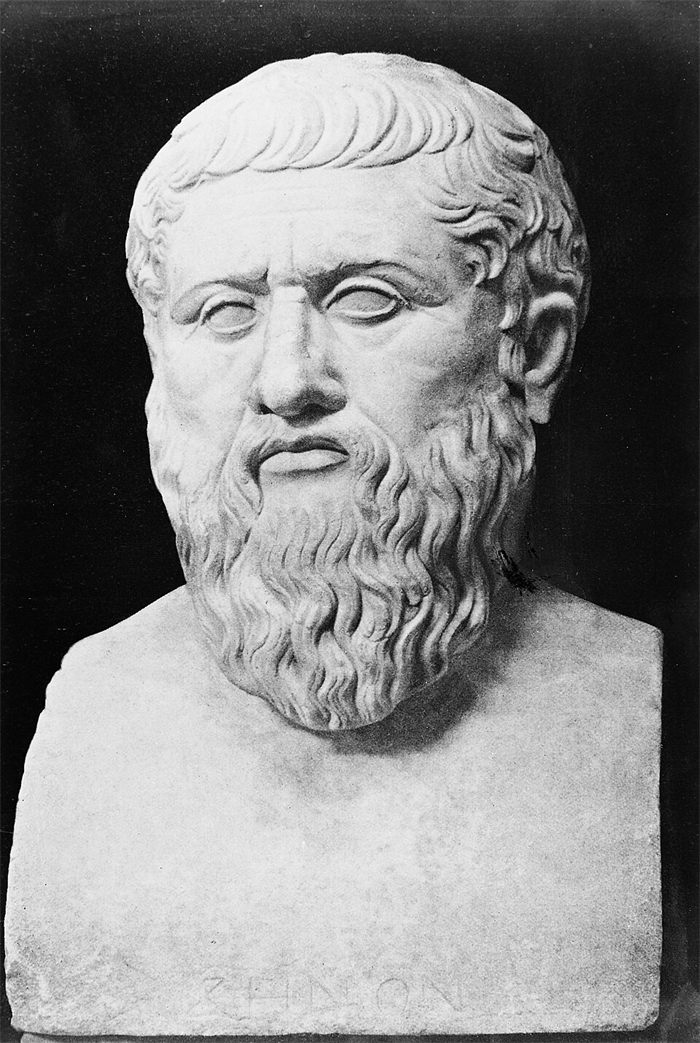
In one sentence
Behind this changing world are perfect, unchanging Forms like Justice and Beauty, and only my reason, not my senses, can know them.
How someone from Platonism might sum up what they believe. Our summary, not a quotation.
Key thinkers
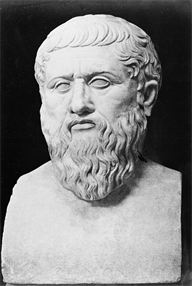 Platoc. 428–348 BC · Republic
 Gottlob Frege1848–1925 · The Foundations of Arithmetic
 Iris Murdoch1919–1999 · The Sovereignty of Good
 G. H. Hardy1877–1947 · A Mathematician's Apology
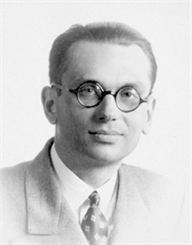 Kurt Gödel1906–1978 · On Formally Undecidable Propositions of Principia Mathematica and Related Systems
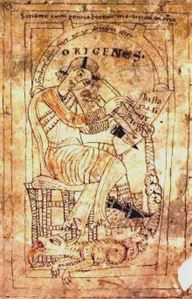 Origenc. 185–c. 253 · On the First Principles
 Roger Penroseborn 1931 · The Emperor's New Mind
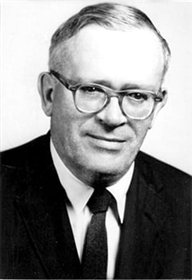 Richard M. Weaver1910–1963 · Ideas Have Consequences
Where it leans
A whole worldview, about both. Positions are our estimates; philosophers argue about where many schools belong.
Most unusual position
84%On spirit or matter, it leans further toward spirit than 84% of the 135 schools on the map.
Middle of all schools on the map: 39 · This school: 10 (0 = Spirit, 100 = Matter)
Most typical position
Subjective or objectiveOn subjective or objective, it is nearest to the other schools on the map, though still not in the middle.
Middle of all schools on the map: 79 · This school: 95 (0 = Subjective, 100 = Objective)
Where it comes from
What came before Platonism and led into it, and what grew out of it. Only links that historians agree on.
Came before it
- Pythagoras (6th century BC)
- Heraclitus (around 500 BC)
- Parmenides (5th century BC)
- Socrates (5th century BC)
Grew out of it
- Aristotle (4th century BC)
- Neoplatonism
- Augustine (4th to 5th century)
- Gottlob Frege (late 19th century), Platonism about numbers
One thing to practise
A real practice from Platonism, to try this week. Described in our words.
Ask what it really is
Pick a word you use about yourself, such as courage or fairness, and write a one-line definition of it. Then look for an example where your definition fails, and rewrite it. Repeat until you get stuck, and notice what you have learned.
From: Socrates in Plato's Laches (on courage) and Euthyphro (on piety)
Its strongest argument
The best case Platonism makes against people who see the world very differently, in two sentences. People whose furthest school this is see it on their result.
No circle you have ever drawn is perfectly round and no act you have seen is perfectly just, yet you recognise both as falling short of a standard you never met with your senses. So if you think only what you can see and touch is real, you need to explain where that standard, which you use every day, comes from.
The argument in our own words, not a quotation.
Where it sits
On the maps
Each map puts two scales side by side. Each small square is a school, at its exact spot; its name shows where there is room. For the others, point at the square, or tap it once on a phone. The first, Reality & truth, puts spirit or matter across and subjective or objective up and down. Click a school, or tap it again, to open it.
Swipe sideways to see the whole chart.
Thinkers in this school
Pictured thinkers nearest this spot on the map
Neighbours on the map
The six schools closest to this one.
- Dvaita VedantaA Hindu school holding that God, souls and matter are forever different and real, and souls are freed only by God's grace through devotion.
- AugustinianismAugustine's view that people are fallen and need God's grace, and that true happiness is found only in God.
- Ash'arismThe main Sunni theology: God directly creates every event and act, good is what God commands, and reason defends the faith but cannot set right and wrong alone.
- VishishtadvaitaA Hindu school holding that God is one, yet souls and the world are truly real as his body, and loving surrender to God brings freedom.
- HegelianismReality is spirit coming to know itself through history, as each idea meets its opposite and both are lifted into something higher.
- PerennialismAll the great religions point to one shared, timeless truth beneath their different surfaces.
And you, where do you stand?
Take the quiz and see your match with Platonism and the other 134 schools.
Take the quiz