In one sentence
I teach persuasion and success, and with Protagoras I say "man is the measure of all things": truth depends on the person.
How someone from Sophists might sum up what they believe. Our summary, not a quotation.
Key thinkers
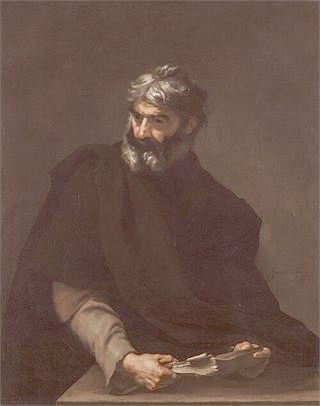
 Protagorasc. 490–420 BC · Theaetetus (by Plato)
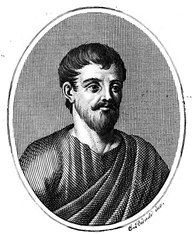 Gorgiasc. 483–375 BC · On Non-Existence (On Nature)
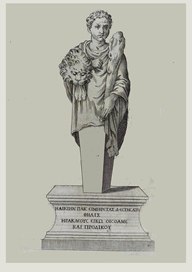 Prodicusc. 465–395 BC · The Choice of Heracles (Horai)
Antiphonc. 480–411 BC · On Truth
Where it leans
A whole worldview, about both. Positions are our estimates; philosophers argue about where many schools belong.
Most unusual position
95%On subjective or objective, it leans further toward subjective than 95% of the 135 schools on the map.
Middle of all schools on the map: 79 · This school: 10 (0 = Subjective, 100 = Objective)
Most typical position
Spirit or matterOn spirit or matter, it is nearest to the other schools on the map, though still not in the middle.
Middle of all schools on the map: 39 · This school: 73 (0 = Spirit, 100 = Matter)
Where it comes from
What came before Sophists and led into it, and what grew out of it. Only links that historians agree on.
Came before it
- Heraclitus (about 500 BC)
- Athenian democracy, where citizens argued their own cases in court and assembly (5th century BC)
Grew out of it
- Socrates and Plato, who argued against them (5th to 4th century BC)
- Isocrates and the schools of rhetoric (4th century BC)
- The Second Sophistic (1st to 3rd century AD)
One thing to practise
A real practice from Sophists, to try this week. Described in our words.
Argue both sides
Take a question you feel sure about and write the strongest case for each side, as if you had been paid to defend it. Protagoras taught that on every question there are two opposing arguments.
From: Protagoras, as reported by Diogenes Laertius, book 9; the anonymous Dissoi Logoi (about 400 BC)
Its strongest argument
The best case Sophists makes against people who see the world very differently, in two sentences. People whose furthest school this is see it on their result.
People in different cities hold opposite customs to be right, and the same wind feels cold to one person and mild to another, so there is no view from nowhere, only arguments that persuade or fail. So if you think your values hold for everyone, the Sophist asks how you would prove that to someone raised to believe the opposite.
The argument in our own words, not a quotation.
Where it sits
On the maps
Each map puts two scales side by side. Each small square is a school, at its exact spot; its name shows where there is room. For the others, point at the square, or tap it once on a phone. The first, Reality & truth, puts spirit or matter across and subjective or objective up and down. Click a school, or tap it again, to open it.
Swipe sideways to see the whole chart.
Thinkers in this school
Pictured thinkers nearest this spot on the map
Neighbours on the map
The six schools closest to this one.
- PoststructuralismMeaning is never fixed; language, power and history shape what counts as true or normal.
- NietzscheanismGod is dead, so create your own values, overcome yourself and say yes to life.
- EgoismMax Stirner's view: God, the state and morality are "spooks", and the individual should be their own master, answering to nothing above themselves.
- PostmodernismSuspicion of grand stories and universal truths; knowledge is local, plural and shaped by language and power.
- PyrrhonismSuspend judgement on every question, and peace of mind follows.
- SkepticismWe cannot know things for certain, so we should doubt claims to knowledge.
And you, where do you stand?
Take the quiz and see your match with Sophists and the other 134 schools.
Take the quiz