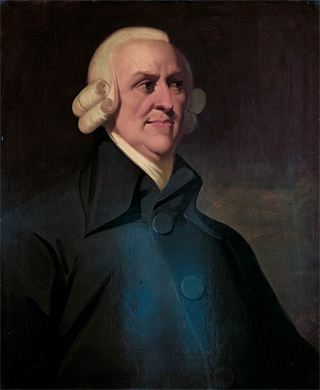

In one sentence
I think our sense of right comes from sympathy and an imagined impartial spectator, and that free exchange lets each person's interest benefit all.
Adam Smith's view as we would sum it up in their voice. Our summary, not a quotation.
Key book
The Theory of Moral Sentiments1759Explains moral judgment through sympathy and the impartial spectator we imagine within us, arguing that ethics grows from our social feelings.School: Moral Sense Theory
Circle: The Scottish Enlightenment · part of it from 1752 · end not recorded
Teacher: Francis Hutcheson
Where Adam Smith leans
Positions are our estimates from their main works, not scores they gave themselves.
Most unusual position
54%On logic and analysis or lived experience, Adam Smith leans further toward lived experience than 54% of the 163 thinkers on this site.
Middle of all thinkers on this site: 50 · Adam Smith: 75 (0 = Logic and analysis, 100 = Lived experience)
Most typical position
Principles or consequencesOn principles or consequences, Adam Smith sits close to the middle of the thinkers on this site.
Middle of all thinkers on this site: 30 · Adam Smith: 30 (0 = Principles, 100 = Consequences)
Side by side with you
Black dot: this thinker. Red ring: you.
On the maps
Each map puts two scales side by side. Each small square is a school, at its exact spot; its name shows where there is room. For the others, point at the square, or tap it once on a phone. The first, Reality & truth, puts spirit or matter across and subjective or objective up and down. Click a school, or tap it again, to open it.
Swipe sideways to see the whole chart.
Thinkers like this one
Pictured thinkers closest to this one
And you, where do you stand?
Take the quiz and see your match with Adam Smith and the other 743 thinkers.
Take the quiz