6 members on this site
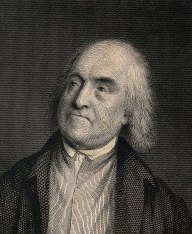 Jeremy Bentham1748–1832 · UtilitarianismPart of it 1823–1828 · moved onjournal sold in 1828 when the founding money ran out
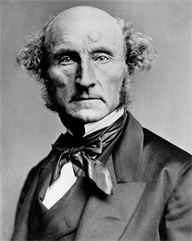 John Stuart Mill1806–1873 · UtilitarianismPart of it from 1824 · end not recordededited the merged London and Westminster Review until 1840
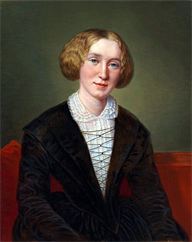 George Eliot1819–1880Part of it from 1851 · moved onturned to novels; one of her last essays was 1856
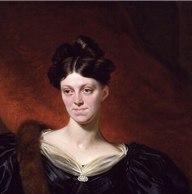 Harriet Martineau1802–1876 · PositivismPart of it from 1837 · end not recorded
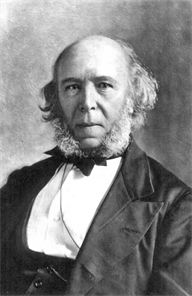 Herbert Spencer1820–1903 · Evolutionary EthicsPart of it from 1851 · end not recorded
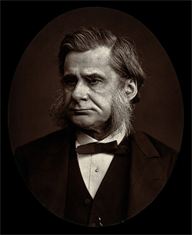 Thomas Henry Huxley1825–1895Years not recorded
Where the circle leans
Spirit or matterStrong · Matter
Spirit 20%Matter 80%
Facts: subjective or objectiveStrong · Objective
Subjective 22%Objective 78%
Values: subjective or objectiveStrong · Objective
Subjective 23%Objective 77%
Free will or determinismStrong · Determinism
Free will 25%Determinism 75%
Individual or collectiveBalanced
Individual 49%Collective 51%
Reason or experienceVery strong · Experience
Reason 9%Experience 91%
Life: meaning, or none at allLeaning · Life has meaning
Life has meaning 59%No meaning at all 41%
The good life: pleasure, or virtue and dutyVery strong · Pleasure is the good
Pleasure is the good 92%Virtue and duty 8%
What makes an act right: principles, or consequencesVery strong · Consequences
Principles 7%Consequences 93%
God: exists, or notBalanced
God exists 43%No God 57%
Universals: real, or only particular thingsStrong · Only particular things
Universals are real 17%Only particular things 83%
Method: logic and analysis, or lived experienceStrong · Logic and analysis
Logic and analysis 75%Lived experience 25%
Knowledge: we can know, or suspend judgmentBalanced
We can know 55%Suspend judgment 45%
The average of its members on each scale where two or more of them have a position and they roughly agree.
Side by side with you
Black dot: the circle, at the average of its members. Red ring: you.
On the maps
Each map puts two scales side by side. Each small square is a school, at its exact spot; its name shows where there is room. For the others, point at the square, or tap it once on a phone. Click a school, or tap it again, to open it.
Swipe sideways to see the whole chart.
Closest circles
Sources
Where the list of members comes from: the exact words on each page.
The Westminster Review was a quarterly British publication
wikipedia.orgEstablished in 1823 as the official organ of the Philosophical Radicals, it was published from 1824 to 1914
wikipedia.orgIn 1823, the paper was founded (and funded) by Jeremy Bentham
wikipedia.orgcontinued in the second by his son John Stuart Mill
wikipedia.orgbut with William Edward Hickson in place of Mill as editor
wikipedia.orgIn 1851 the journal was acquired by John Chapman based at 142 the Strand, London
wikipedia.orgThe then unknown Mary Ann Evans, later better known by her pen name of George Eliot, had brought together his authors
wikipedia.orgHarriet Martineau and the young journalist Herbert Spencer
wikipedia.orgMary Ann Evans ( George Eliot ) became assistant editor
wikipedia.orgAfter 1853 John Tyndall joined Huxley in running the science section of the Westminster Review and formed a group of evolutionists who helped pave the way for Charles Darwin’s 1859 publication of On the Origin of Species
wikipedia.org
And you, where do you stand?
Take the quiz and see your match with The Westminster Review and the other circles.
Take the quiz