In one sentence
The economy shapes our ideas and politics; history is class struggle, and it ends in a classless society.
How someone from Marxism might sum up what they believe. Our summary, not a quotation.
Key thinkers
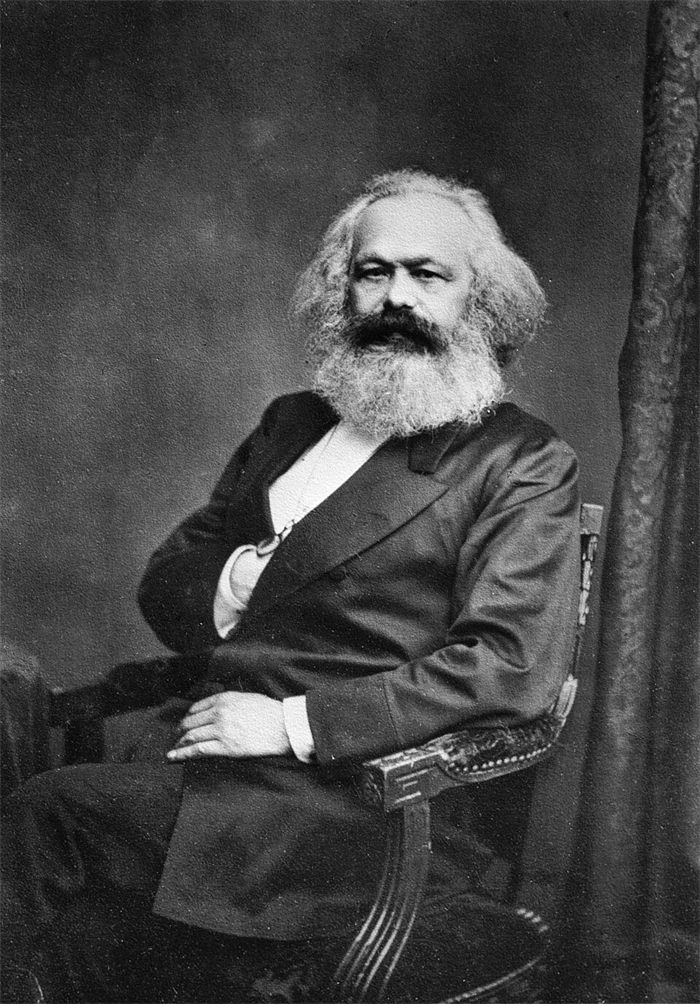
 Karl Marx1818–1883 · Capital, Volume I
 György Lukács1885–1971 · History and Class Consciousness
 Herbert Marcuse1898–1979 · One-Dimensional Man
 Louis Althusser1918–1990 · For Marx
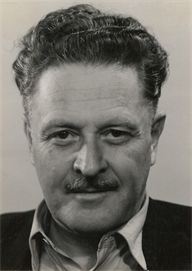 Nâzım Hikmet1902–1963 · Human Landscapes from My Country
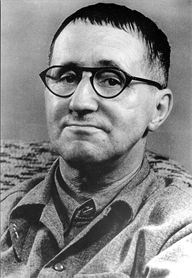 Bertolt Brecht1898–1956 · A Short Organum for the Theatre
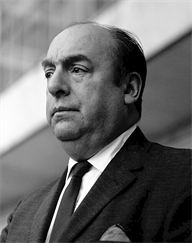 Pablo Neruda1904–1973 · Canto General
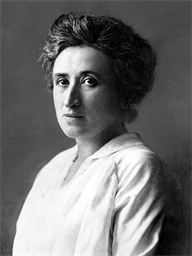 Rosa Luxemburg1871–1919 · Social Reform or Revolution?
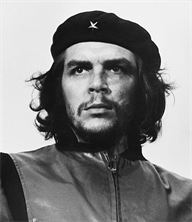 Che Guevara1928–1967 · Socialism and Man in Cuba
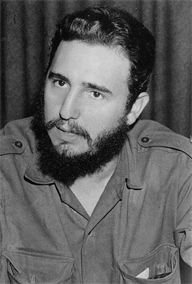 Fidel Castro1926–2016 · History Will Absolve Me
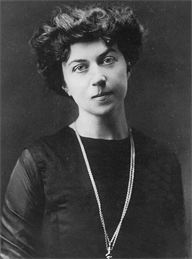 Alexandra Kollontai1872–1952 · The Social Basis of the Woman Question
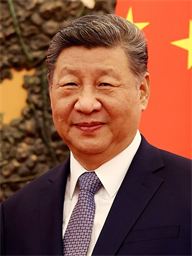 Xi Jinpingborn 1953 · The Governance of China
 Mark Fisher1968–2017 · Capitalist Realism: Is There No Alternative?
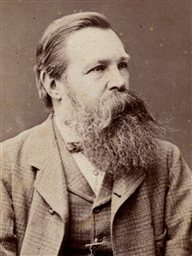 Friedrich Engels1820–1895 · Herr Eugen Dühring's Revolution in Science (Anti-Dühring)
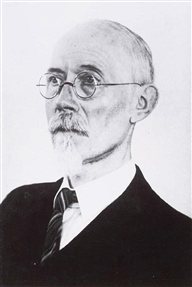 Anton Pannekoek1873–1960 · Lenin als Philosoph (Lenin as Philosopher)
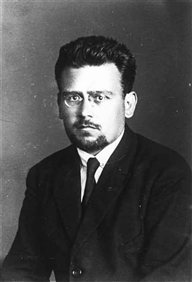 Amadeo Bordiga1889–1970 · Il principio democratico (The Democratic Principle)
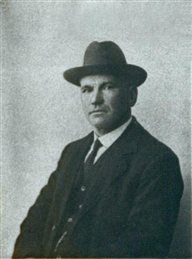 John Maclean1879–1923 · Speech from the Dock
Where it leans
A whole worldview, about both. Positions are our estimates; philosophers argue about where many schools belong.
Most unusual position
94%On spirit or matter, it leans further toward matter than 94% of the 135 schools on the map.
Middle of all schools on the map: 39 · This school: 95 (0 = Spirit, 100 = Matter)
Most typical position
Subjective or objectiveOn subjective or objective, it sits close to the middle of the schools on the map.
Middle of all schools on the map: 79 · This school: 85 (0 = Subjective, 100 = Objective)
Where it comes from
What came before Marxism and led into it, and what grew out of it. Only links that historians agree on.
Came before it
- G. W. F. Hegel (early 19th century)
- Adam Smith and David Ricardo, political economy (1776 to 1817)
- Henri de Saint-Simon, Charles Fourier and French socialism (early 19th century)
Grew out of it
- Vladimir Lenin and the Russian Revolution (1917)
- György Lukács, History and Class Consciousness (1923)
- Theodor W. Adorno, Herbert Marcuse and the Frankfurt School (from the 1930s)
One thing to practise
A real practice from Marxism, to try this week. Described in our words.
A workers' inquiry
Answer, in writing, plain questions about your own job: how many hours you work, what you are paid, who owns the tools and the product, how much you make in a day, and what happens if you fall ill. Marx wrote such a questionnaire so workers could describe their own conditions.
From: Karl Marx, A Workers' Inquiry, about a hundred questions, La Revue socialiste (20 April 1880)
Its strongest argument
The best case Marxism makes against people who see the world very differently, in two sentences. People whose furthest school this is see it on their result.
A worker paid for a day's labour produces goods worth more than the wage, and the owner keeps the difference, so profit comes from unpaid work even when contracts are signed freely. So if you think the market simply rewards contribution, Marx would ask who owns the tools and who must sell their time.
The argument in our own words, not a quotation.
Where it sits
On the maps
Each map puts two scales side by side. Each small square is a school, at its exact spot; its name shows where there is room. For the others, point at the square, or tap it once on a phone. The first, Reality & truth, puts spirit or matter across and subjective or objective up and down. Click a school, or tap it again, to open it.
Swipe sideways to see the whole chart.
Thinkers in this school
Pictured thinkers nearest this spot on the map
Neighbours on the map
The six schools closest to this one.
- MechanismThe universe works like a machine, explained completely by matter in motion following fixed laws.
- ScientismScience is the only reliable route to knowledge; any claim it cannot test is not real knowledge.
- Eliminative MaterialismThe everyday idea of the mind is a false theory: things like "beliefs" and "desires" don't really exist, and brain science will replace them.
- NaturalismNature is all there is, and everything, including mind and morality, can be explained by natural causes.
- Dialectical MaterialismMarx and Engels' view that matter comes first and that history moves through the conflict of opposing forces.
- HobbesianismPeople are driven by self-preservation, so without a strong sovereign life would be a war of all against all.
And you, where do you stand?
Take the quiz and see your match with Marxism and the other 134 schools.
Take the quiz